
A 25 g snack bag running at 60 bags per minute looks like a solved problem until the fill weight slides half a gram low, a smear of seasoning oil reaches the seal, and the checkweigher starts rejecting one bag in twelve. At that point no amount of extra machine speed helps. The fix is almost always upstream of the machine itself: the dosing method was chosen for the wrong product behaviour.
So here is the practical order of decisions for anyone buying an automatic bagging machine for food. Choose the dosing system from the physical behaviour of the product, choose the bag format from how the pack will be sold and handled, and only then compare machine frames on speed, hygiene design and price. Get that order wrong and you will spend the next two years compensating with air pressure, seal temperature and operator patience.
Content
Two products with the same target weight can need completely different machines. Icing sugar and frozen sweetcorn both go into 500 g bags, but one is a fluid-like powder that will dust every seal surface in the plant, and the other is a dense, free-flowing solid that a multihead weigher handles almost effortlessly. Buying on price per bag without checking which of those you actually have is the most common and most expensive mistake in food bagging.
The table below is the split we work from in practice. It is not exhaustive, but it covers most food categories that reach a bagging line.
| Product behaviour | Dosing method that suits it | What you can reasonably expect | Typical failure if mismatched |
|---|---|---|---|
| Free-flowing granules, pellets, frozen pieces | Multihead weigher, 10 to 20 heads | Tight, stable weights from 10 g to several kilograms | Product bridging in the infeed, causing short bags |
| Fine, dusty powders | Servo-driven auger filler or a sealed linear weigher | Good repeatability, sensitive to bulk density changes | Dust migrating onto the seal jaws |
| Sticky, oily or high-fat pieces | Volumetric cup, or a weigher with non-stick contact surfaces | Moderate, because dosing is by volume | Product clinging in hoppers and drifting weight |
| Fragile items such as chips and crackers | Linear weigher or slow-drop multihead | Moderate to tight, with gentle handling | Breakage and fines collecting at the bag base |
| Discrete pieces sold by count | Vibratory bowl counter | Exact count rather than weight | Miscounts when pieces overlap on the track |
| Irregular fibrous pieces | Combination weigher with wide discharge chutes | As wide as the piece-to-piece variation | Jams and stopped discharge |
Two things sit outside the table. Bulk density changes between deliveries of the same ingredient, so an auger or volumetric system set up on Monday's flour can drift on Thursday's batch. And very few products behave the way the specification sheet says at the end of a shift, once room temperature and humidity have moved. Send real production samples for a trial run with your actual film, not a generic sample roll.
For an overview of how these methods group by product type, our food packaging solutions page lists the configurations we build most often.
Once dosing is settled, the bag format decides the machine architecture.
Vertical form-fill-seal runs from a roll of flat film, so you buy film rather than finished bags and the running cost per pack is usually lower. It is the standard choice for pillow bags of snacks, rice, sugar, frozen vegetables and similar products at high output. The trade-off is changeover: a different bag width or length means a former change and re-setting of the seal jaws, which costs real production time.
Pre-made pouches arrive sealed on three sides, or already in stand-up form, and are opened mechanically, filled and resealed. Unit cost per bag is higher, but changeover is faster and the pack supports shelf presence, zippers and a wider range of shapes. Where the standing pouch is part of the brand, pre-made is normally the only sensible route.
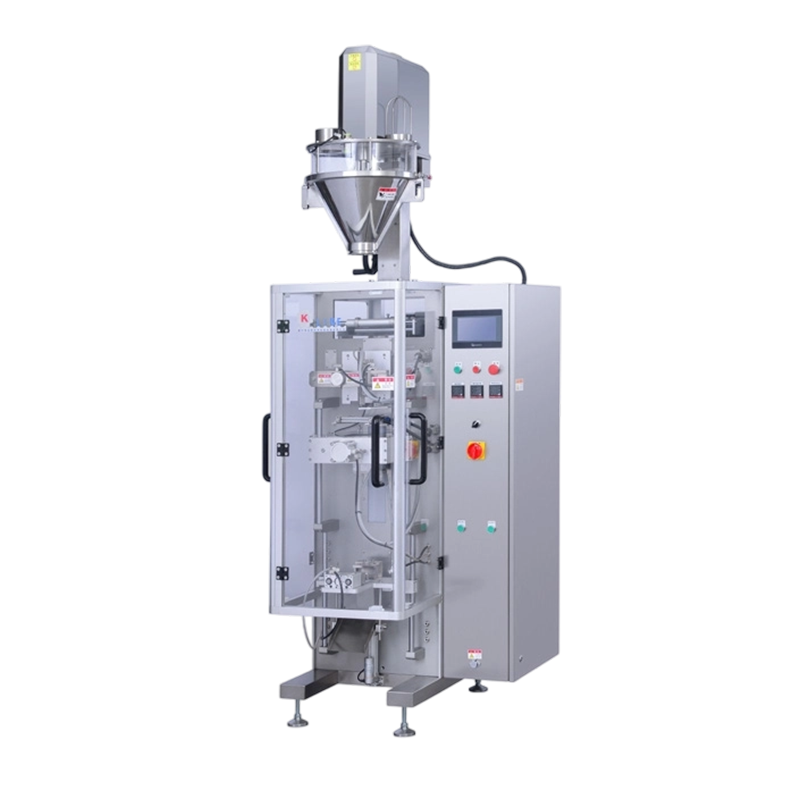
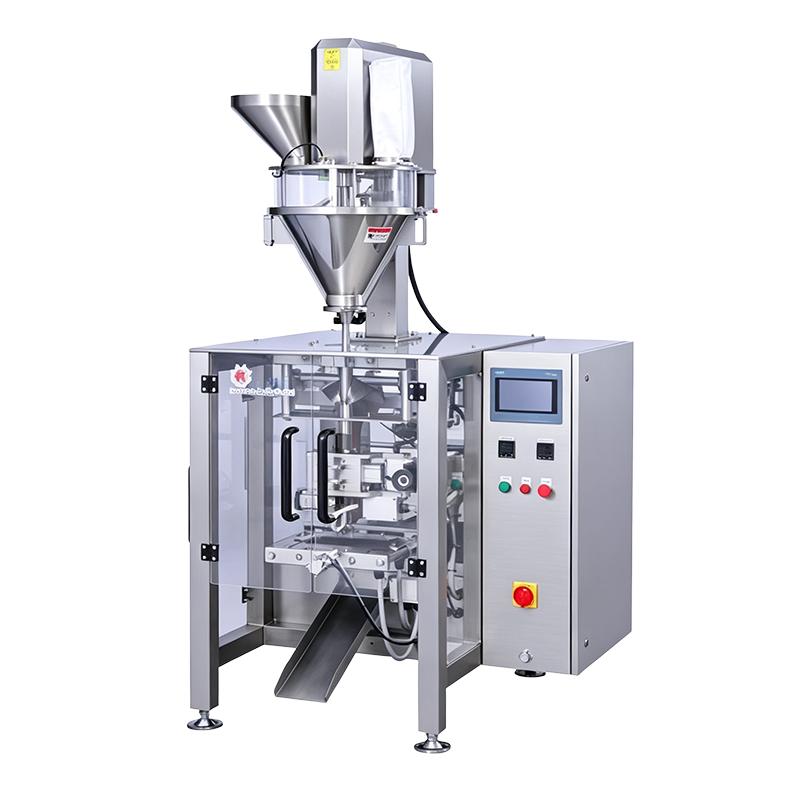
For roll film, a vertical machine such as the KL180H high-speed vertical packing machine is the familiar answer, with the weigher mounted above the forming tube.
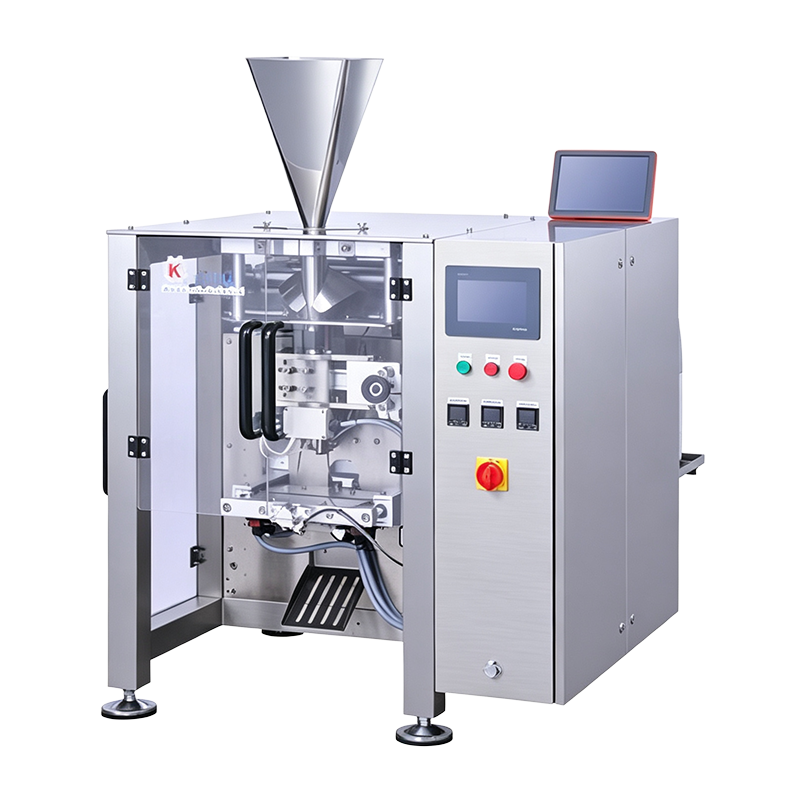 KL180H High-Speed Vertical Packing MachineA vertical roll-film machine for candy and puffed snacks, offering 15–150 bags/min and keeping KL180S bag dimensions to simplify line upgrades.View Product →
The clip below shows snack pieces being fed into the weigher above a KL180H-type vertical line, which is the setup described above.
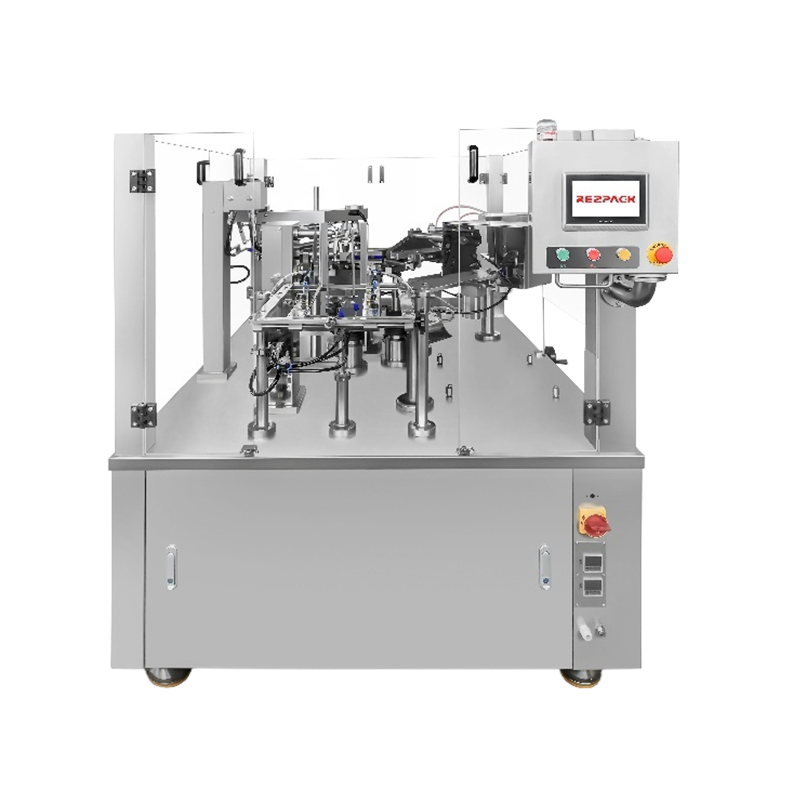
When the same product has to ship as a stand-up retail pack, the KL10220E automatic stand-up pouch packing machine runs the opening, filling and sealing sequence on a pre-made pouch instead.
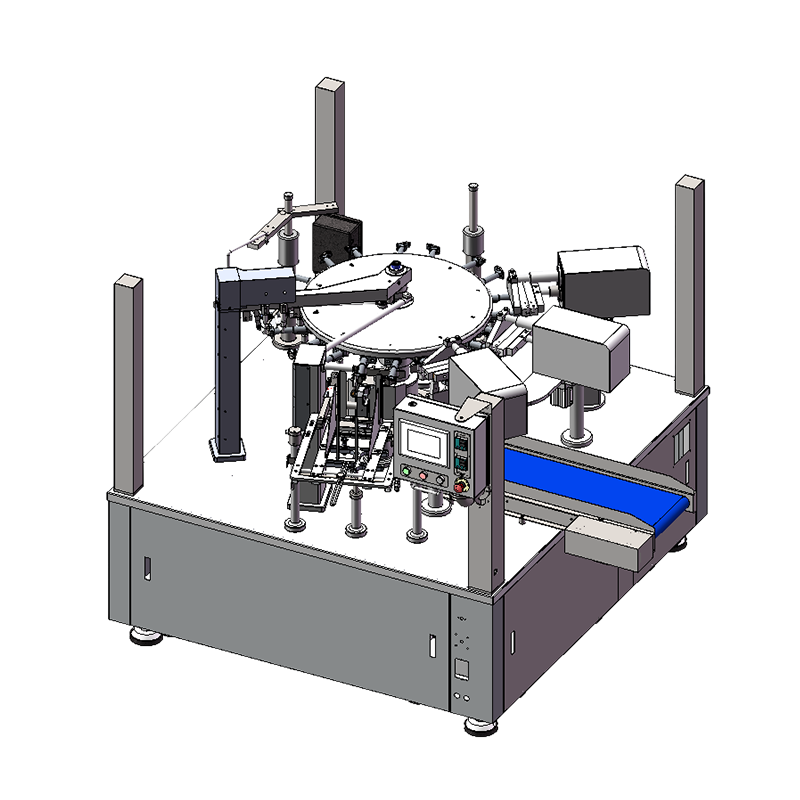 KL10-220E Automatic Stand-Up Pouch Packing MachineA 10-station premade-pouch machine for stand-up, zipper, and flat bags, handling up to 1500 g at speeds up to 60 bags/min.View Product →
Most factories eventually run both, one for high-volume value lines and the other for products that need shelf differentiation. That is normal, not indecision.
Speed and weigh accuracy are quoted together but they are not the same promise. A line rated at 80 bags per minute with a 1 g tolerance is not the same machine as one rated at 80 bags per minute with a 3 g tolerance, even though the brochures look identical. Ask for the accuracy figure at the speed you will actually run, with your product density, and ask what the rejection rate was during the trial.
In practice the weigher sets that number. A 20-head mixing weigher can combine different target weights into the same bag from one run, which is what makes mixed snack and variety packs economic at all.
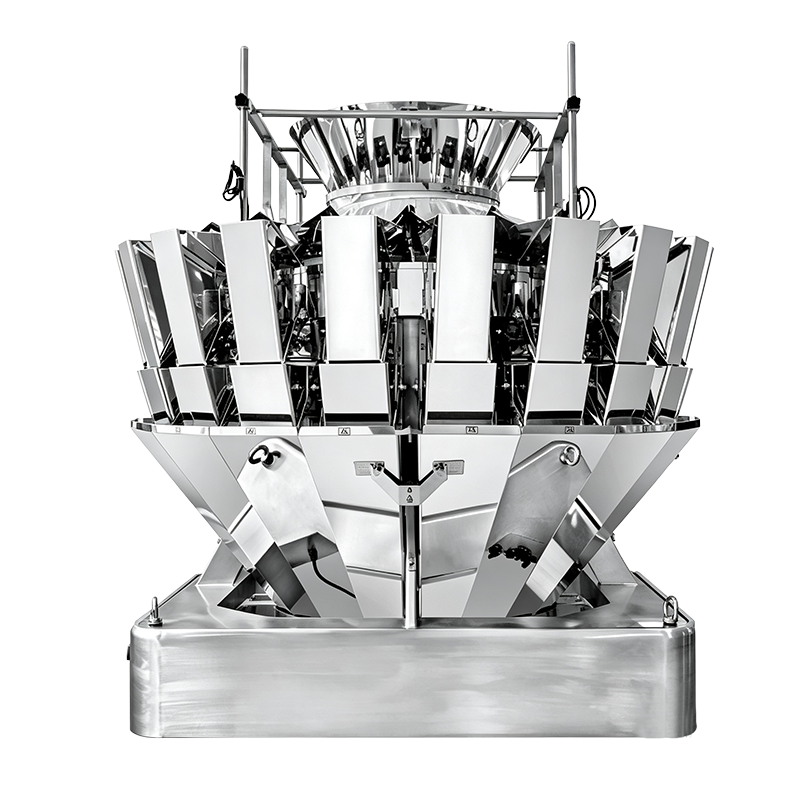 Second-Generation 20-Head Mixing Multihead WeigherA 20-head weighing system for single-material runs and multi-material mixing, supporting mixed snack and variety packs with speeds up to 65 P/M.View Product →
Where a multihead weigher is hard to justify, such as low volumes or a product that will not settle reliably, a linear weigher or servo-driven auger usually does the job for a fraction of the price. The choice between the two is set out in more detail in multihead versus linear weighing.
Food bagging machines are judged on small design decisions that are hard to see in a photograph. Three matter more than the rest.
Inspection is also where factories most often over-buy or under-buy. A checkweigher catching weight deviation is not a substitute for a metal detector, and neither of them substitutes for controlling the dosing process upstream.
Buyers usually compare the price of the bagger itself. The number that actually decides the project is the cost of everything attached to it: the infeed elevator, take-away conveyor, checkweigher, coding head, case packer, and above all the time needed to change over between products.
A changeover that takes two hours instead of twenty minutes costs more per year than the difference between two machine quotes. Ask three questions before signing: how many tools a format change needs, how long one operator takes to do it unaided, and which spare parts the supplier keeps in stock. Then ask how quickly they respond when a seal bar fails at 2 a.m. on a Sunday.
Film consumption deserves its own line in the calculation. Roll film for a vertical machine is thinner and cheaper per pack than a pre-made pouch, but it also generates more waste during setup. Run the numbers on twelve months of real volumes, not on a demonstration week.
Speed depends almost entirely on the dosing method and the bag size. Small pillow bags of free-flowing granules can reach roughly 60 to 120 bags per minute on a well-matched vertical line, while powder filling into large pouches is often limited to 20 to 40 bags per minute by the auger. Treat any speed figure without an accuracy figure beside it as marketing.
Usually, within limits. Swapping the weigher or auger, the forming tube and the film is a mechanical job of an hour or more; going between two weights of the same product takes minutes. If you need to alternate between dusty powders and large frozen pieces on one line, two machines are often cheaper over five years than one machine and constant cleaning.
No. Multihead weighers earn their cost on free-flowing products at tight tolerances and high output. For low volumes, sticky products, or items sold by count, a linear weigher, volumetric cup or vibratory counter is usually the better match.
Both are normally expected by food safety schemes, and both should be sized on the largest pack the line will produce, not the average one. Fit them after sealing so every finished pack passes through, and plan a reject bin that cannot be reached by accident.
Buying a food bagging machine is mostly a decision about product behaviour, not about brochures. Get a trial on your own material, insist on accuracy figures tied to a stated speed, and count changeover time and spare parts as seriously as the price on the quote. If you want a second opinion on a specific product and pack format, our team will run the numbers with you before any specification is fixed.

Contact Us
+86-573-82788180
+86-15325730953
Need E-mail
info@mainfill.com
jiayingzhuge18@qq.com
About
Jiaxing K-Line Machinery Co., Ltd. is an automatic packaging machinery manufacturer and service provider serving the domestic high-end and overseas markets.
Links
Products
Get a Free Quote

 English
 中文简体
 Español
 русский