
Two factories can install the same vertical bagger, the same multihead weigher and the same checkweigher and still end the year with lines that behave very differently. The equipment list is rarely what separates them; the layout is. Distance between stations, where rejected bags drop, how much room a technician has to swing open a guard door, and where film rolls are stored all decide how many good bags leave the line per shift.
The short answer: build the automatic packaging line layout around the pace-setting machine and a realistic good-output target first, then widen it for service access, changeover and reject handling. Layouts drawn backwards from whatever floor space happens to be free tend to hand the expensive problems — starvation at the bagger, blocked conveyors, changeovers that need two people — to the production team after installation.
Content
Every line has one station that sets the rhythm. On a granule line it is usually the vertical form-fill-seal machine. On a powder line it may be the auger filler or the screw weigher. On a multi-SKU line it is often the pouch machine with the longest changeover. Find it first, then treat every other station as support.
Two numbers drive the arrangement: the rate of that station, and the number of hours per shift it actually produces good packs. A bagger rated at 80 bags per minute will not deliver 80 all shift — film splices, weighing cycle time, seal cooling, reject removal and short stops all take a bite. Teams that size downstream conveyors and case packers to the nameplate figure usually end up with a case packer that is starved most of the shift. Teams that size to measured good output leave room to improve without buying twice.
In practice, line output is close to the slowest station rate multiplied by realistic uptime, not the sum of every spec sheet in the quotation. Fix that number before anyone draws a conveyor line, because it decides whether you need one bagger or two, and whether the end of line should be manual or automatic.
Whatever the product, an automatic line falls into five functional blocks, and each one asks a different question of the floor plan. Keeping weighing and bag forming physically close shortens the product drop, which reduces dust, spillage and weight drift. Keeping inspection and reject handling next to an aisle prevents reject bins from being buried behind guards — a small decision that saves a lot of walking.
| Zone | Typical equipment | Question to settle early |
|---|---|---|
| Infeed and feeding | Z-type bucket elevator, vacuum loader, inclined conveyor, screw elevator | Where does raw material arrive, and can an operator refill without stepping inside the guarded area? |
| Weighing and dosing | Multihead weigher, linear weigher, auger filler, volumetric cup | Which weighing principle suits the product, and how far is the drop to the bag former? |
| Bag or pouch forming | Vertical form-fill-seal machine, automatic premade pouch machine | Which bag styles run now, and which are likely within the next three years? |
| Inspection and reject | Checkweigher, metal detector, X-ray inspection system | Where does a rejected pack go, and can the reject be confirmed without stopping the line? |
| Case packing and palletizing | Case erector, case packer, sealer, coder, palletizing robot | Manual or automatic end of line, and how much accumulation space does each option need? |
Three topologies cover most factory floors, and the choice changes the footprint long before a single model number is fixed. A series line runs one product flow through every station. A parallel line duplicates part of the flow so one half can keep running while the other stops. A mixed line shares a common front end and splits downstream, which suits a long-run base product with short-run variants.
| Topology | Best fit | Trade-off |
|---|---|---|
| Series | One product family, high volume, stable demand | Highest efficiency per square metre, but no redundancy — one stop stops everything |
| Parallel | Several SKUs, or production where uptime matters more than floor space | Duplicates equipment and utilities, roughly doubling the space for part of the flow |
| Mixed | Long-run base product plus frequent short runs | Good balance overall, but routing, merging and controls need more planning effort |
If your good-output target can be reached on a series line with reasonable buffers, resist the temptation to build two half-lines. Duplicated flow paths mean duplicated cleaning, duplicated changeover and twice as many places for product to sit and go stale.
Most layout rework comes from items that were nobody's job until installation week. Walk the drawing with these six points before sign-off:
On wet or sticky products, add drainage falls, washdown protection for motors and sensors, and a plan for where rinse water leaves the room. These are cheap lines on a drawing and expensive ones after the concrete is poured.
Once the zones and topology are fixed, equipment selection narrows quickly. The pace-setting bagger determines conveyor height and buffer size; the weighing head determines cycle time and therefore the length of the drop; the inspection station determines where the reject chute and confirmation bin must live.
For medium-bag granule and snack production, a high-speed vertical machine is often the anchor: the KL230H runs a medium bag format at the higher end of the speed range, so downstream conveyors and the case packer must be sized from it rather than from a slower machine that will be replaced later.
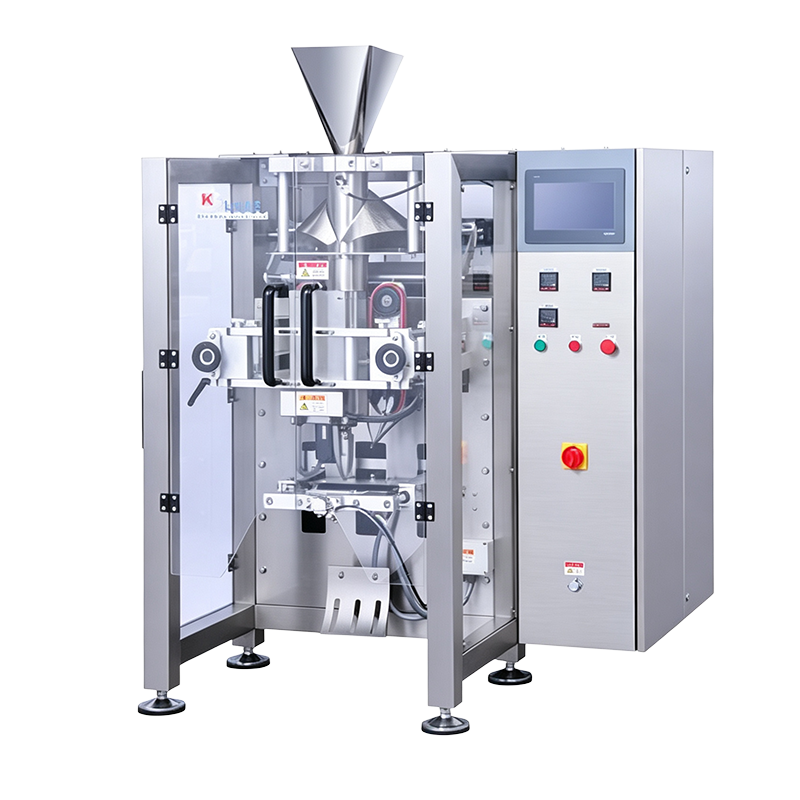 KL230H High-Speed Medium Bag Vertical Packing MachineKL230H high-speed vertical packer for medium bags, 15–150 bags/min, suits nut, frozen-food and agricultural producers needing higher medium-bag throughput.View Product →
Where the pack weight window is narrow — small pouches, precise dosing, low giveaway tolerance — a high-precision linear weigher is usually a better layout partner than a large multihead head count, because its shorter cycle keeps the drop path compact and the dust capture simple.
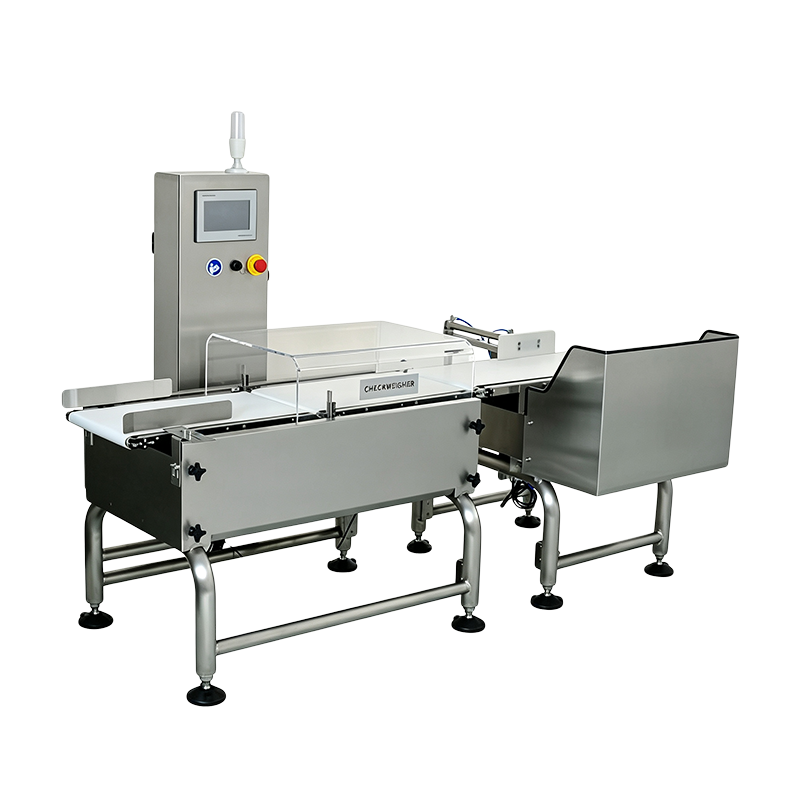 EW-300-1000 High-Precision Linear Weighing CheckweigherFor narrow pack-weight windows and precise dosing, this linear checkweigher offers ±0.3 g accuracy and up to 80 pieces/min on a 300 mm belt.View Product →
The inspection block deserves early placement, not a leftover corner. A standard metal detector placed after sealing and before case packing needs enough open conveyor length for a clean reject and a confirmation bin an operator can reach without leaning over a guard. If you are still comparing head counts and weighing principles, this guide on choosing between multihead and linear weighing explains where each one fits.
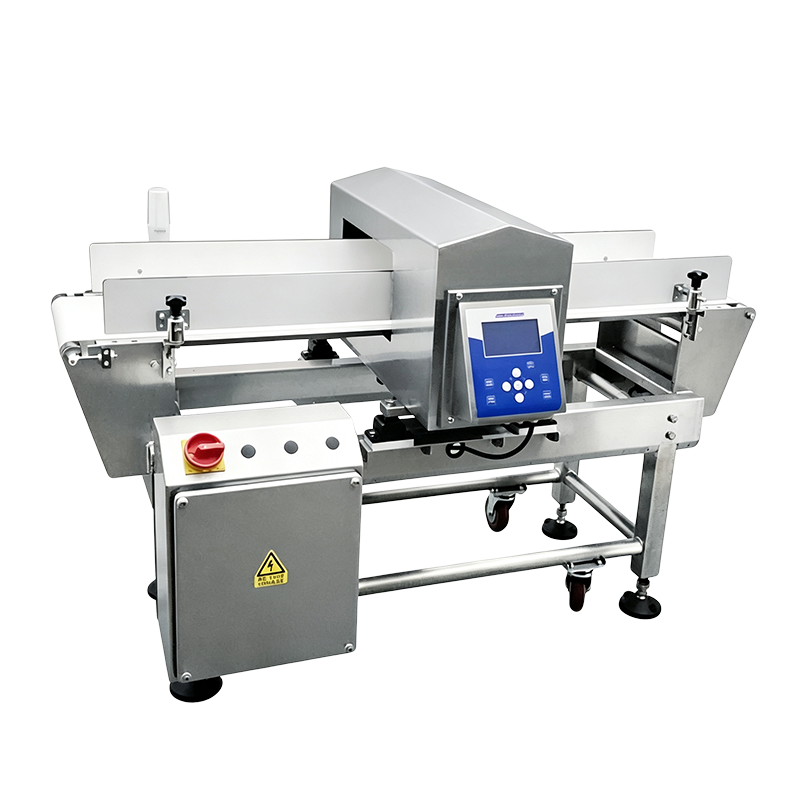 ER3515 Standard Metal Detection MachineStandard metal detector for bagged snacks, boxed medicines and bottled seasonings; 350×150 mm aperture, Fe≥0.8 mm detection capability.View Product →
Layout drawings look calm because nothing on them changes over. Real lines do. If three SKUs share a bagger, the layout should place format parts, film and print cylinders within arm's reach of the machine, and keep the tool trolley out of the walkway. A changeover that takes 25 minutes instead of 45 is often a storage location decision, not a technical one.
Buffers are the other quiet factor. A short accumulation table between the bagger and the case packer absorbs micro-stops and keeps the line from stopping every time a case erector hesitates. Too much buffer, however, hides a slow station and lets product sit long enough to matter on sticky or temperature-sensitive goods — so size it for a few minutes of output, not a shift.
Reject handling deserves the same discipline. Metal detection, checkweighing and X-ray rejects should land in a locked or clearly labelled bin outside the guarded area, with a confirmation sensor positioned so a failed reject stops the line rather than letting a suspect pack continue. Food, pet food and agricultural lines usually add dust control, washdown and pest-proofing to this block; the food packaging solutions overview shows how those configurations are typically grouped.
There is no useful generic figure. Space follows throughput, bag size and how much buffer you want, plus the service clearances around each machine. A compact single-bagger line with a manual end of line can fit into a few dozen square metres, while the same product with automatic case packing and palletizing may need several times that, mostly for accumulation and pallet staging.
Most layouts put metal detection after sealing and before or after checkweighing, depending on pack stability and the reject mechanism. The deciding factor is usually reject confirmation: whichever unit rejects first must have room for its bin and its sensor, and the second unit should not re-accept a pack that the first one already condemned.
Reserve floor space and utility capacity rather than buying the second machine immediately. Extra length at the inspection and case packing zone, a spare compressed air drop and one additional power feed are inexpensive during construction and awkward afterwards.
Line speed is what the slowest station can do in ideal conditions. Good output is what leaves the line as saleable product per shift, after stops, rejects, changeovers and cleaning. Layout decisions, especially buffer size and access room, affect the second number far more than the first.
The most useful thing you can bring to a supplier conversation is not a wish list of machines — it is a measured good-output target, the SKU list for the next three years, and a floor plan with the column grid and utility drops marked. With those three items, an automatic packaging line layout stops being a drawing exercise and becomes a production decision that still looks sensible two years after commissioning.

Contact Us
+86-573-82788180
+86-15325730953
Need E-mail
info@mainfill.com
jiayingzhuge18@qq.com
About
Jiaxing K-Line Machinery Co., Ltd. is an automatic packaging machinery manufacturer and service provider serving the domestic high-end and overseas markets.
Links
Products
Get a Free Quote

 English
 中文简体
 Español
 русский